Picture this: I’m juggling a half‑finished stir‑fry, a phone call from a friend daring me to make something “quick and impressive,” and a sudden, unmistakable craving for the kind of comfort food that feels like a hug from a Chinese grandma. The kitchen was a chaotic orchestra of clanging pans, the pungent aroma of garlic hitting the air like a siren, and the faint hum of the fridge that seemed to whisper, “You’ve got this.” I was about to give up when I remembered a tiny trick I’d learned years ago—using a splash of sesame oil at the very end to lock in that nutty perfume—and the whole dish transformed from “meh” to “mind‑blowing.” That moment sparked the birth of the ultimate version of Chinese ground beef, a recipe that takes the humble ingredients we all have on hand and turns them into a flavor bomb that could out‑shine any take‑out box. I dare you to taste this and not go back for seconds, because once you’ve experienced the perfect balance of salty, sweet, and umami, ordinary meals will never satisfy you again.
What makes this version truly stand out is the way each component plays off the others like a well‑rehearsed choir. The ground beef, lean yet juicy, absorbs the soy‑ginger‑garlic symphony, while the cabbage retains a satisfying crunch that refuses to wilt into mush. I’m not just talking about a good stir‑fry; I’m talking about a dish that sings with texture, aroma, and a depth of flavor that most home‑cooked versions miss entirely. Most recipes get the sauce wrong, either drowning the veggies or leaving the meat dry, but this one hits the sweet spot—thick enough to cling to every strand of cabbage, yet light enough to let the fresh green onions sparkle at the finish. And the secret? A splash of sesame oil added at the very end, a move that adds a whisper of nuttiness without overwhelming the palate. Okay, ready for the game‑changer? Let me walk you through every single step — by the end, you’ll wonder how you ever made it any other way.
If you’ve ever struggled with soggy cabbage or a bland ground beef that tastes like it was cooked in a vacuum, you’re not alone. I’ve burned my share of meals trying to get that perfect “wok‑kissed” char, and I’ve learned that the devil is in the details—temperature, timing, and that decisive moment when you hear the sizzle that tells you the pan is hot enough to seal in juices. Imagine the sound of the beef hitting the pan, a sharp crackle that promises caramelization, followed by the fragrant hiss of garlic and ginger dancing together. This recipe respects those moments, giving you clear checkpoints so you never have to guess whether you’ve reached that golden‑brown perfection. Picture yourself pulling this out of the wok, the whole kitchen smelling incredible, steam rising in lazy curls, and a plate that looks like a glossy, ruby‑red masterpiece waiting to be devoured. Stay with me here — this is worth it.
Now, before we dive into the nitty‑gritty, let’s talk about the one ingredient that can make or break this dish: the soy sauce. I’m using a light, naturally brewed soy sauce that offers a clean, salty backbone without the heaviness of dark soy. Pair that with a pinch of sugar (just a whisper) to balance the salt and bring out the natural sweetness of the cabbage, and you’ve got a sauce that coats the beef like velvet. The ginger and garlic aren’t just aromatics; they’re the dynamic duo that adds warmth and a punch of zing that cuts through the richness of the beef. And the green onions? They’re the fresh, zesty garnish that adds a pop of color and a hint of sharpness right before the final bite. This is hands down the best version you’ll ever make at home, and I’m about to spill every secret that makes it happen.
What Makes This Version Stand Out
- Flavor Depth: The combination of soy sauce, ginger, and garlic creates a multi‑layered umami that lingers on the palate, making each bite more satisfying than the last.
- Texture Harmony: Crisp cabbage meets tender, juicy ground beef, delivering a contrast that keeps your fork busy and your mouth happy.
- Simplicity: Fewer than ten ingredients mean you can pull this together in under an hour, perfect for busy weeknights.
- Unique Finish: A drizzle of sesame oil at the end adds a nutty aroma that elevates the dish without overpowering it.
- Crowd‑Pleaser: Even picky eaters love the mild heat and familiar flavors, making it a safe bet for family meals or gatherings.
- Ingredient Quality: Using lean ground beef and fresh cabbage ensures a healthier profile without sacrificing taste.
- One‑Pan Wonder: Everything cooks in the same wok or skillet, reducing cleanup and concentrating flavors.
- Make‑Ahead Friendly: This dish reheats beautifully, and the flavors actually deepen after a night in the fridge.
Inside the Ingredient List
The Flavor Base
First up, the aromatics: garlic and ginger. Fresh garlic offers a sharp, pungent bite that mellows into a sweet, caramelized note as it cooks, while ginger brings a warm, peppery heat that cuts through the richness of the beef. Skipping either of these is like trying to sing without a melody—you’ll end up with a flat, uninspired dish. If you’re out of fresh ginger, a teaspoon of ground ginger works in a pinch, though the bright zing will be a tad muted. When choosing garlic, look for firm, plump cloves; soft spots mean the garlic is past its prime and can introduce a bitter aftertaste.
The Texture Crew
Cabbage is the unsung hero of this stir‑fry. Its natural crunch holds up beautifully against the high heat, and its slightly sweet flavor absorbs the sauce without becoming soggy. I recommend using a mix of green and red cabbage for a pop of color and a subtle earthiness that adds depth. If you’re short on cabbage, try Napa cabbage or even shredded bok choy; both provide a similar crunch but with a milder flavor. When selecting cabbage, aim for heads that feel heavy for their size and have tightly packed leaves—this indicates freshness and a firm texture.
The Unexpected Star
Sesame oil is the secret weapon that turns an ordinary stir‑fry into a gourmet experience. Its toasted, nutty aroma is intense, so a little goes a long way; think of it as the perfume that finishes the outfit. Adding it at the very end preserves its volatile compounds, ensuring you get the full aromatic punch without the oil turning bitter. If you’re allergic or simply don’t have sesame oil, a drizzle of peanut oil can mimic the richness, though the flavor profile will shift slightly toward a milder nuttiness.
The Final Flourish
Green onions, or scallions, provide the final bright note that lifts the dish. Their sharp, slightly oniony flavor contrasts the savory sauce, while the green tops add a fresh, herbaceous finish. Slice them just before serving to retain their crispness and vibrant color. If you can’t find green onions, thinly sliced chives or a sprinkle of fresh cilantro can serve as an alternative, though the flavor will be less sharp.
Everything's prepped? Good. Let’s get into the real action, where heat meets flavor and the magic truly begins.
The Method — Step by Step
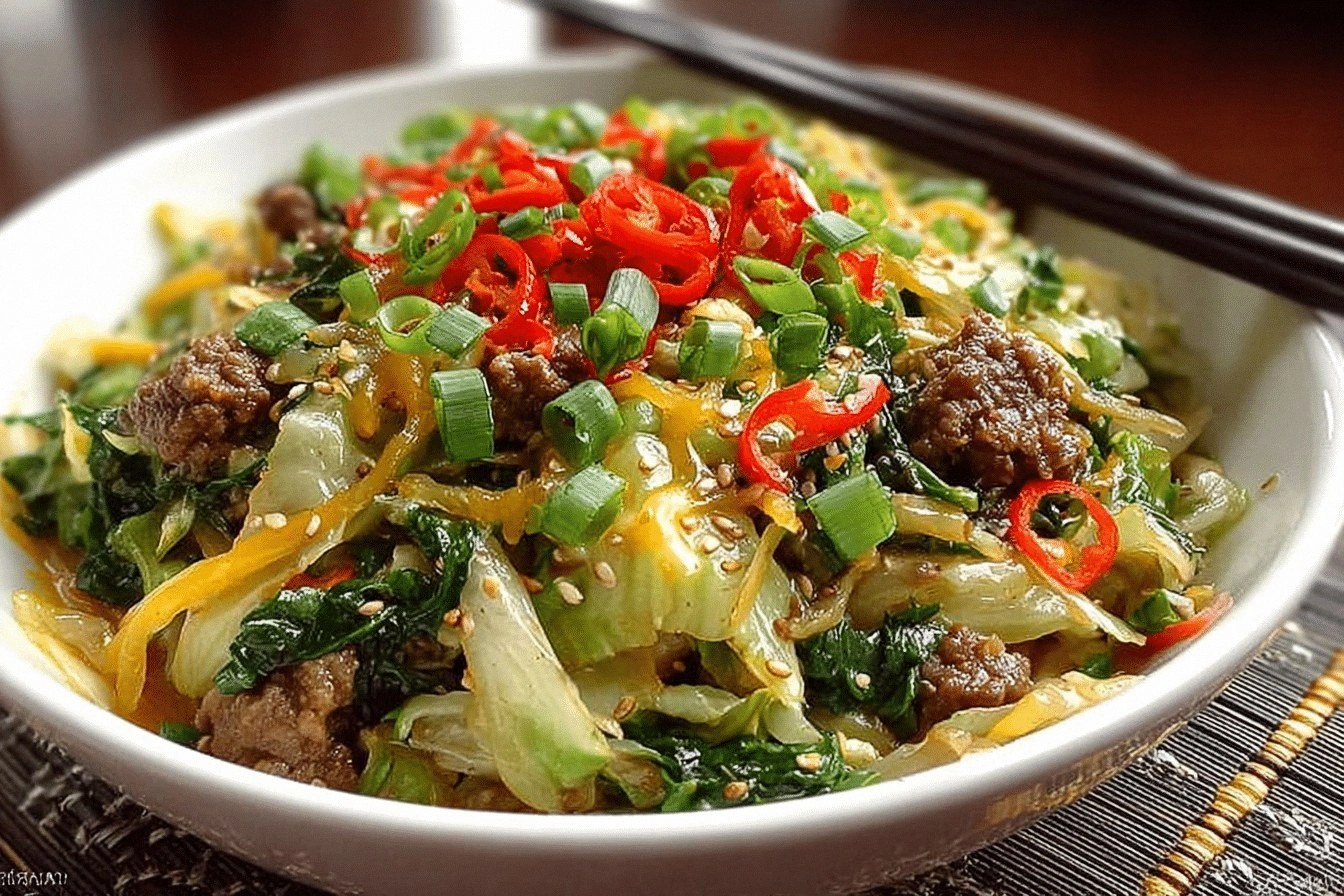
Heat a large wok or deep skillet over medium‑high heat until a drop of water sizzles and evaporates instantly; this is the moment of truth for a proper stir‑fry. Add a tablespoon of neutral oil—such as canola or grapeseed—and swirl to coat the surface. When the oil shimmers, it’s ready for the beef. Toss in the ground beef, breaking it apart with a spatula, and let it sit untouched for about 30 seconds to develop a caramelized crust. Once the edges start turning brown, stir vigorously, crumbling the meat until it’s evenly browned and no longer pink.
Kitchen Hack: Use a metal spatula to press the meat against the wok’s surface; this encourages better Maillard reaction and richer flavor.Once the beef is nicely browned, push it to the side of the wok and lower the heat to medium. In the cleared space, add a splash more oil if the pan looks dry, then pour in the minced garlic and ginger. Listen for that intoxicating sizzle—this is the aromatic foundation that will permeate the entire dish. Stir constantly for about 45 seconds, being careful not to let the garlic burn, which would introduce bitterness. When the mixture turns a light golden and releases a fragrant steam, it’s time to bring everything together.
Now, introduce the cabbage. Toss the shredded cabbage into the wok, using tongs to lift and fold it so that each strand gets a quick kiss from the hot surface. The cabbage should wilt slightly but still retain a crunch; this usually takes 2–3 minutes. If the wok seems crowded, add the cabbage in batches, allowing each batch to get a brief moment of direct heat. The goal is a glossy, slightly softened texture that still offers a satisfying bite. Keep the heat steady; too low and the cabbage will steam into mush.
Time for the sauce: drizzle the soy sauce evenly over the mixture, then sprinkle a pinch of sugar (or a drizzle of honey) to balance the saltiness. Stir quickly to coat every piece of beef and cabbage, watching as the liquid bubbles and thickens, clinging to the ingredients like a silky veil. Watch Out: If you add the soy sauce too early, it can cause the beef to release excess moisture, resulting in a soggy stir‑fry. Add it at this stage to ensure a glossy, concentrated glaze.
Watch Out: Over‑salting is easy with soy sauce; taste before adding extra salt, and remember the sauce will intensify as it cools.Give the mixture a final toss, making sure the sauce evenly coats every strand of cabbage and each crumb of beef. At this point, the aroma should be a heady blend of garlic, ginger, and soy, with a faint nutty hint from the oil. Lower the heat to low, and drizzle the sesame oil in a thin stream, allowing it to swirl and perfume the dish without frying. This is the moment where the dish transitions from “good” to “wow”—the sesame oil adds a lingering finish that makes the flavors linger on the palate.
Kitchen Hack: For an extra glossy finish, toss the stir‑fry with a teaspoon of cornstarch slurry (1 tsp cornstarch mixed with 2 tsp water) just before adding the sesame oil.Remove the wok from the heat and sprinkle the sliced green onions over the top, letting their fresh, sharp flavor shine through the warm dish. Give everything one gentle toss to incorporate the green onions without wilting them completely; they should stay bright green and slightly crunchy. Let the dish rest for a minute—this brief pause allows the flavors to meld, creating a harmonious bite every time.
Serve the stir‑fry hot, straight from the wok, over steamed jasmine rice, quinoa, or even cauliflower rice for a low‑carb twist. The steam rising from the bowl should carry the scent of sesame and ginger, inviting you to dive in immediately. If you’re feeling extra indulgent, a side of pickled vegetables adds a tangy contrast that cuts through the richness. Remember, the dish is best enjoyed while it’s still sizzling, because the texture of the cabbage will start to soften if left to sit too long.
That’s it — you did it. But hold on, I’ve got a few more tricks that’ll take this to another level, from a quick garnish to a secret spice blend that will keep your guests begging for the recipe. Trust me, these final touches are the icing on the cake, and they’ll make your version the talk of the dinner table for weeks to come.
Insider Tricks for Flawless Results
The Temperature Rule Nobody Follows
The key to a perfect stir‑fry is a hot wok. If the surface isn’t hot enough, the ingredients will steam rather than sear, resulting in a soggy texture. I always pre‑heat the wok for at least two minutes before adding oil; you’ll know it’s ready when a drop of water dances and evaporates instantly. This high heat creates that coveted “wok‑kissed” char on the beef, locking in juices and flavor. A friend once tried to skip this step, and the result was a mushy, flavorless mess—lesson learned.
Why Your Nose Knows Best
Never underestimate the power of smell when cooking. The moment the garlic and ginger start to release their fragrance, you’ve reached the perfect point for adding the cabbage. If the kitchen smells like burnt garlic, you’ve gone too far and need to start over. Trusting your nose saves you from overcooking the aromatics, which can introduce bitterness. This sensory checkpoint is the secret behind my consistently vibrant stir‑fry.
The 5‑Minute Rest That Changes Everything
After you finish cooking, let the dish sit off the heat for about five minutes. This short rest allows the sauce to thicken slightly and the flavors to meld, creating a more cohesive bite. It’s a trick I learned from a professional chef who swears by the “rest” principle for everything from steaks to soups. Skipping this step means the sauce may be a bit thin and the flavors less integrated. So, set a timer, step away, and come back ready to serve a dish that tastes like it’s been simmering all day.
Balance Is King
While soy sauce brings salt, a tiny pinch of sugar (or honey) balances the savory with a subtle sweetness, preventing the dish from tasting one‑dimensional. If you prefer a less sweet profile, reduce the sugar to a quarter teaspoon, but never eliminate it completely—sweetness is what makes the sauce round and satisfying. I’ve experimented with adding a splash of rice vinegar for a faint acidity that brightens the whole dish, but that’s optional.
Pre‑Mince for Speed
Having garlic and ginger already minced in the fridge cuts prep time dramatically. Store them in airtight containers, and they’ll stay fresh for up to a week. This habit not only speeds up cooking but also ensures you always have the aromatics on hand for impromptu stir‑fry cravings. If you’re short on time, use a garlic press and a micro‑plane for ginger—both tools produce fine pieces that integrate quickly.
Creative Twists and Variations
This recipe is a playground. Here are some of my favorite ways to switch things up:
Spicy Szechuan Kick
Swap half the soy sauce for Szechuan peppercorn oil and add a tablespoon of doubanjiang (fermented bean paste). The result is a tongue‑tingling heat that pairs perfectly with the beef’s richness. Garnish with toasted peanuts for crunch.
Thai‑Inspired Coconut Curry
Replace the sesame oil with a splash of coconut milk and add a teaspoon of red curry paste. The dish takes on a creamy, aromatic profile that’s perfect with jasmine rice. Finish with fresh cilantro and a squeeze of lime.
Vegetarian Version
Use crumbled firm tofu or plant‑based ground “beef” instead of meat, and increase the cabbage amount for extra bulk. Add sliced shiitake mushrooms for an earthy depth. The soy‑ginger base works just as well, making a satisfying meat‑free alternative.
Umami Boost
Stir in a teaspoon of mushroom soy sauce or a splash of fish sauce for an extra layer of savory depth. This little addition makes the sauce cling to the ingredients like a velvety coating, enhancing the overall umami punch.
Crunchy Nutty Variation
Add a handful of toasted cashews or sliced almonds during the final toss. The nuts contribute a buttery crunch that contrasts the tender beef and crisp cabbage, creating a textural symphony.
Storing and Bringing It Back to Life
Fridge Storage
Allow the stir‑fry to cool to room temperature for no more than two hours, then transfer it to an airtight container. It will keep fresh for up to three days. When reheating, add a splash of water or broth to restore moisture, then stir‑fry over medium heat until steaming hot.
Freezer Friendly
Portion the cooled dish into freezer‑safe bags, removing as much air as possible. It freezes well for up to two months. To reheat, thaw overnight in the fridge, then follow the stovetop reheating method with a drizzle of oil and a splash of water.
Best Reheating Method
The stovetop is the champion for reviving this stir‑fry; microwaving can make the cabbage soggy. Heat a tablespoon of oil in a wok, add the frozen or refrigerated portion, and toss over medium‑high heat, adding a teaspoon of water to generate steam. The dish should look glossy again within three minutes, and the flavors will be as vibrant as the first time.