I was halfway through a midnight ramen binge when the alarm went off, and the kitchen was a chaotic mess of noodles, soy sauce, and a single, soggy salmon fillet that had been forgotten in the fridge. I stared at it, wondering if it could save me from the dreaded “what’s for dinner” crisis. Then, with a dramatic flourish, I sliced it into bite‑sized pieces, tossed it into a hot pan, and watched the surface sizzle like a tiny fireworks display. The aroma that rose from the pan was a promise of something extraordinary, and I was hooked from the first bite. That night, I discovered a recipe that would become my go‑to comfort food, and I’m still amazed that it was born from a kitchen disaster.
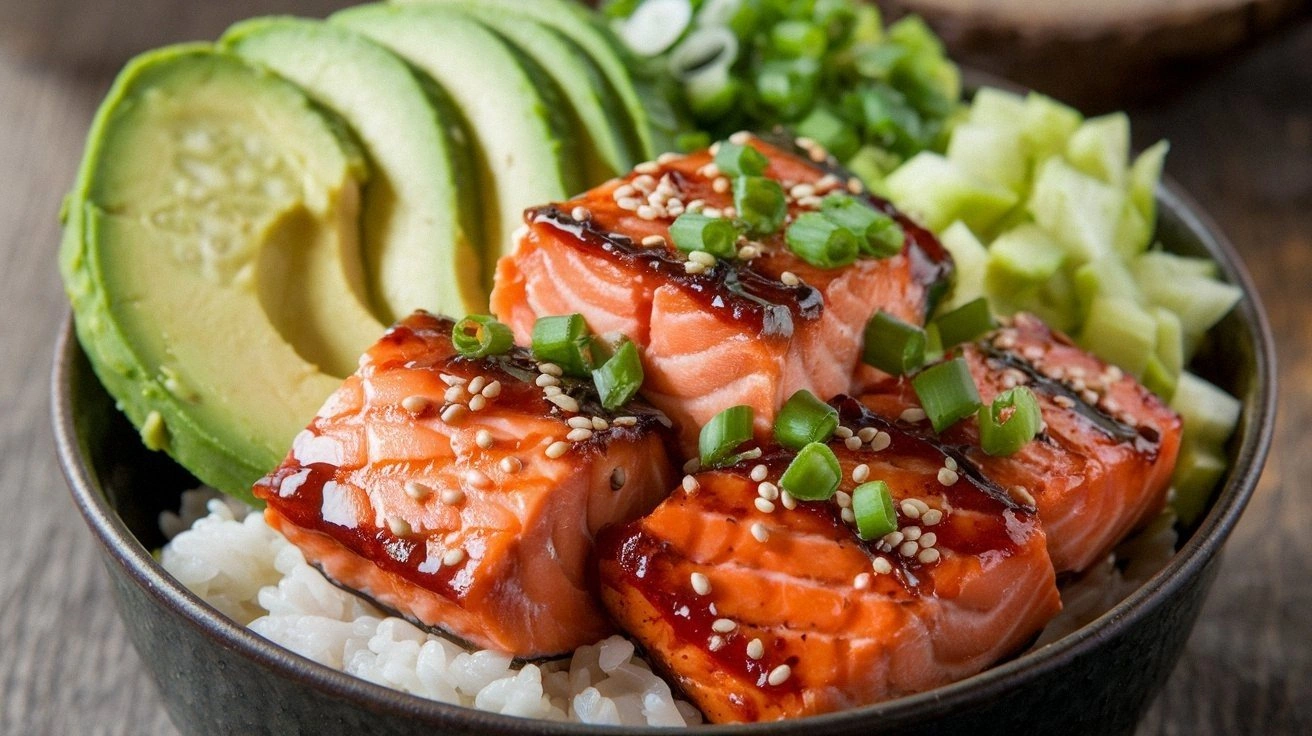
Picture this: the salmon, seared to a golden crisp, glistening with a glossy glaze that’s both sweet and umami‑rich; the rice, fluffy and fragrant, soaking up every last drop of sauce; the fresh cucumber ribbons, adding a burst of crunch that cuts through the richness; and the creamy avocado, melting into the bowl like a velvety cloud. The air is filled with the scent of toasted sesame and a hint of citrus, while the sound of the skillet’s sizzle is the soundtrack to a culinary triumph. Each bite is a harmony of textures—crisp edges, tender flesh, and silky sauce—that dance on your palate. If you’ve ever struggled to balance flavor and texture in a bowl, you’re not alone, and I’ve got the fix.
What makes this version stand out is not just the quality of ingredients but the way they’re orchestrated. The glaze is a masterstroke of balance: honey’s natural sweetness, soy sauce’s depth, a splash of rice vinegar’s acidity, and a whisper of sriracha for heat. The salmon is cooked to perfection—juicy inside, slightly caramelized outside—so it doesn’t dry out like many other bowl recipes. The rice is cooked with a touch of sesame oil, giving it a nutty aroma that pairs beautifully with the fish. And the final flourish of fresh herbs and sesame seeds adds a pop of color and crunch that elevates the dish from ordinary to unforgettable.
I dare you to taste this and not go back for seconds. The moment the sauce coats your tongue, you’ll understand why this is hands down the best version you’ll ever make at home. Picture yourself pulling this out of the oven, the whole kitchen smelling incredible, and every bite delivering a burst of flavor that feels like a warm hug. Stay with me here—this is worth it.
What Makes This Version Stand Out
- Flavor: The glaze marries sweetness, umami, acidity, and heat into a single, silky coating that lingers on the salmon and rice.
- Texture: The salmon’s crispy edges snap like thin ice, while the interior stays tender and moist, creating a satisfying contrast.
- Ingredient Quality: Fresh, high‑grade salmon and hand‑picked vegetables are the backbone of this bowl’s deliciousness.
- Visual Appeal: The vibrant colors—emerald cucumber, golden salmon, creamy avocado—make the dish Instagram‑ready.
- Ease: The recipe requires minimal prep and no fancy gadgets, yet it delivers restaurant‑level flavor.
- Make‑Ahead Potential: The glaze can be pre‑made, and the rice can be cooked in advance, making this bowl perfect for busy weeknights.
- Versatility: Swap the salmon for shrimp or tofu, and the bowl transforms into a different culinary adventure.
Alright, let's break down exactly what goes into this masterpiece...
Inside the Ingredient List
The Flavor Base
The glaze is the heart of this bowl. Soy sauce provides the salty depth that anchors the dish, while honey offers a natural sweetness that balances the heat. Rice vinegar adds a bright acidity that cuts through the richness of the salmon, and a dash of sriracha injects a subtle kick that awakens the palate. A touch of sesame oil is brushed onto the rice to lend a nutty aroma that lingers with every bite. Skipping any of these components will leave the bowl feeling flat; for instance, omitting the vinegar will result in a syrupy glaze that overwhelms the fish.
The Texture Crew
Crispy cucumber ribbons, shredded carrots, and diced avocado bring a spectrum of textures that keep each mouthful exciting. The cucumber adds a refreshing crunch that contrasts the salmon’s buttery softness, while the carrots provide a subtle earthiness. Avocado melts into the bowl, creating a silky, creamy layer that balances the sauce’s intensity. If you’re watching your carbs, you can replace the carrots with snow peas for a lower‑calorie crunch.
The Unexpected Star
A sheet of nori, sliced into thin strips, adds a briny, umami punch that elevates the bowl to sushi‑level sophistication. The nori’s subtle flavor complements the salmon without overpowering it. If you’re vegan, a handful of roasted edamame can replace the nori, offering protein and a satisfying bite.
The Final Flourish
Sesame seeds, scallions, and fresh cilantro are tossed at the end to add brightness, crunch, and a pop of color. The sesame seeds give a nutty finish, while the scallions provide a sharp, oniony note that brightens the dish. A squeeze of lime juice at the table adds a citrusy zing that lifts the flavors. If you’re not a fan of cilantro, mint or basil can be used instead for a different aromatic profile.
Everything's prepped? Good. Let's get into the real action...
The Method — Step by Step
- First, rinse the jasmine rice under cold water until the water runs clear. This removes excess starch and ensures fluffy grains. In a medium saucepan, combine the rice with 2 cups of water, a pinch of salt, and a splash of sesame oil. Bring to a boil, then reduce the heat to low, cover, and let it simmer for 15 minutes. Once the water is absorbed, fluff the rice with a fork and set it aside; the rice will absorb the glaze later, so keep it warm.
- While the rice cooks, prepare the glaze. In a small bowl, whisk together 1/4 cup soy sauce, 2 tablespoons honey, 1 tablespoon rice vinegar, 1 teaspoon sriracha, and 1 teaspoon grated ginger. Add 2 minced garlic cloves for an extra punch. Set the glaze aside; it will be the star of the show.
- Heat a non‑stick skillet over medium‑high heat and add 1 tablespoon of sesame oil. Place the salmon fillets skin‑side down and sear for 2 minutes until the skin is crisp. Flip the fillets and sear the other side for another 2 minutes. The goal is a caramelized crust that locks in moisture. This step is the moment of truth—don’t rush it, or you’ll miss the perfect sear.
- Reduce the heat to medium and pour the glaze over the salmon. Let it simmer for 30 seconds, then spoon some glaze over the fish while it finishes cooking. The glaze should thicken slightly, coating the salmon like a glossy coat. The scent of caramelizing sugar will fill the kitchen—absolute perfection.
- Transfer the salmon to a cutting board and let it rest for a minute. While it rests, dice the cucumber into thin ribbons, shred the carrots, and slice the avocado into wedges. These fresh vegetables will add crunch, sweetness, and creaminess to the bowl.
- Now assemble the bowl. Start with a generous scoop of warm jasmine rice in the bottom. Lay the seared salmon fillets on top, then drizzle the remaining glaze over the fish. Scatter the cucumber ribbons, shredded carrots, and avocado wedges evenly across the bowl. The arrangement should look as good as it tastes.
- Add the final touches: sprinkle 2 tablespoons of toasted sesame seeds, a handful of sliced nori, and a sprinkle of chopped scallions. Finish with a squeeze of lime juice and a few cilantro leaves. The lime’s acidity brightens the dish, while the cilantro adds a fresh herbal note.
- Serve immediately while the salmon is still warm and the rice is fragrant. If you prefer a colder bowl, let the components cool to room temperature before assembling. Either way, the flavors will mingle beautifully.
That's it — you did it. But hold on, I've got a few more tricks that'll take this to another level...
Insider Tricks for Flawless Results
The Temperature Rule Nobody Follows
Many chefs cook salmon at a high heat that results in a dry center. Instead, sear the salmon at medium‑high for the first 2 minutes, then lower the heat to medium for the second side. This technique ensures a caramelized crust while keeping the interior moist and tender. I once tried the opposite and the salmon was a dry, rubbery mess—don’t make that mistake.
Why Your Nose Knows Best
Before you add the glaze to the salmon, smell it. If it smells too sweet, add a splash of soy sauce to balance it. If it’s too salty, a touch of honey or a pinch of sugar can mellow it out. Your nose is the ultimate flavor sensor; trust it.
The 5‑Minute Rest That Changes Everything
After searing, let the salmon rest for 5 minutes before slicing. This allows the juices to redistribute, ensuring each bite is juicy and flavorful. Cutting it immediately can cause the juices to spill out, leaving the fish dry.
The Quick‑Cool Trick for Cold Bowls
If you prefer a cold bowl, place the cooked rice and salmon in a shallow dish and let them cool to room temperature before assembling. This prevents the rice from becoming mushy when you add the glaze.
The Lime Twist
Add a splash of lime juice right before serving. The acidity brightens the dish and cuts through the richness of the salmon and glaze, creating a balanced flavor profile.
Creative Twists and Variations
This recipe is a playground. Here are some of my favorite ways to switch things up:
Shrimp Power Bowl
Swap the salmon for shrimp, pre‑seasoned with a pinch of cayenne. The shrimp cooks faster and adds a sweet, briny flavor that pairs wonderfully with the glaze. This version is perfect for a quick dinner.
Tofu & Tempeh Fusion
For a plant‑based twist, marinate cubed tofu and tempeh in the glaze, then pan‑fry until golden. The tofu absorbs the sauce, while the tempeh adds a nutty crunch. Serve over quinoa for a protein boost.
Coconut Curry Bowl
Add a splash of coconut milk to the glaze and stir in a teaspoon of curry powder. The coconut gives a creamy richness, while the curry adds warmth. Top with roasted chickpeas for extra texture.
Miso‑Glazed Delight
Replace the soy sauce with miso paste to deepen the umami profile. The miso’s earthy notes pair beautifully with the sweet glaze and the salmon’s buttery texture. Garnish with pickled ginger for a tangy finish.
Rainbow Veggie Bowl
Add a rainbow of veggies—red cabbage, edamame, and bell pepper strips—to the bowl. This not only boosts nutrition but also adds a vibrant visual appeal that makes the dish feel festive.
Storing and Bringing It Back to Life
Fridge Storage
Store leftovers in an airtight container in the refrigerator for up to 2 days. Keep the glaze separate until you’re ready to reheat, as it can become thick and sticky.
Freezer Friendly
The rice and salmon can be frozen separately for up to 1 month. Thaw the rice in the microwave, then reheat the salmon in a skillet with a splash of glaze. This preserves the texture and flavor.
Best Reheating Method
When reheating, add a tiny splash of water or broth to the rice to keep it moist. Heat the salmon gently in a non‑stick pan until warmed through. This trick steams the rice back to perfection and keeps the salmon juicy.