Introduction
I was in a frantic rush to satisfy my midnight cravings when I realized I had no bacon. The pantry was barren, the fridge empty, and my taste buds demanding something smoky and salty. I stared at the stack of rice paper, a forgotten ingredient from last week's sushi adventure, and thought, “Why not?”. I grabbed the soy sauce, maple syrup, and a handful of spices, determined to create a bacon alternative that would blow my friends away. The kitchen lights flickered as I prepared the mixture, the air thickening with anticipation.
The scent of soy sauce and maple syrup mingled, creating a sweet‑salty perfume that made my nose twitch. A faint whisper of smoked paprika tickled the air, promising a depth of flavor that would rival any cured pork. The sight of the translucent rice paper sheets glistening under the kitchen light felt oddly comforting, like a blank canvas waiting for a masterpiece. I could hear the faint hiss of the pan as I poured the mixture, and the sound of the rice paper slapping against the heat felt like a drumbeat of anticipation. My fingertips tingled with excitement, ready to transform these sheets into a crispy, savory delight.
What makes this version stand out is not just the fact that it’s plant‑based; it’s the way the sauce coats each sheet like velvet, infusing it with a savory depth that mimics real bacon. The crunch is not a mere imitation—it shatters like thin ice, releasing a burst of smoky, umami flavor that lingers on the palate. I discovered that the secret lies in the balance of liquid smoke and smoked paprika, which together create a smoke profile that feels authentic without overpowering. The maple syrup provides a subtle caramelized sweetness that balances the saltiness, turning each bite into a complex flavor symphony. Most recipes get this completely wrong, but here we hit the sweet spot of crispy, savory, and utterly addictive.
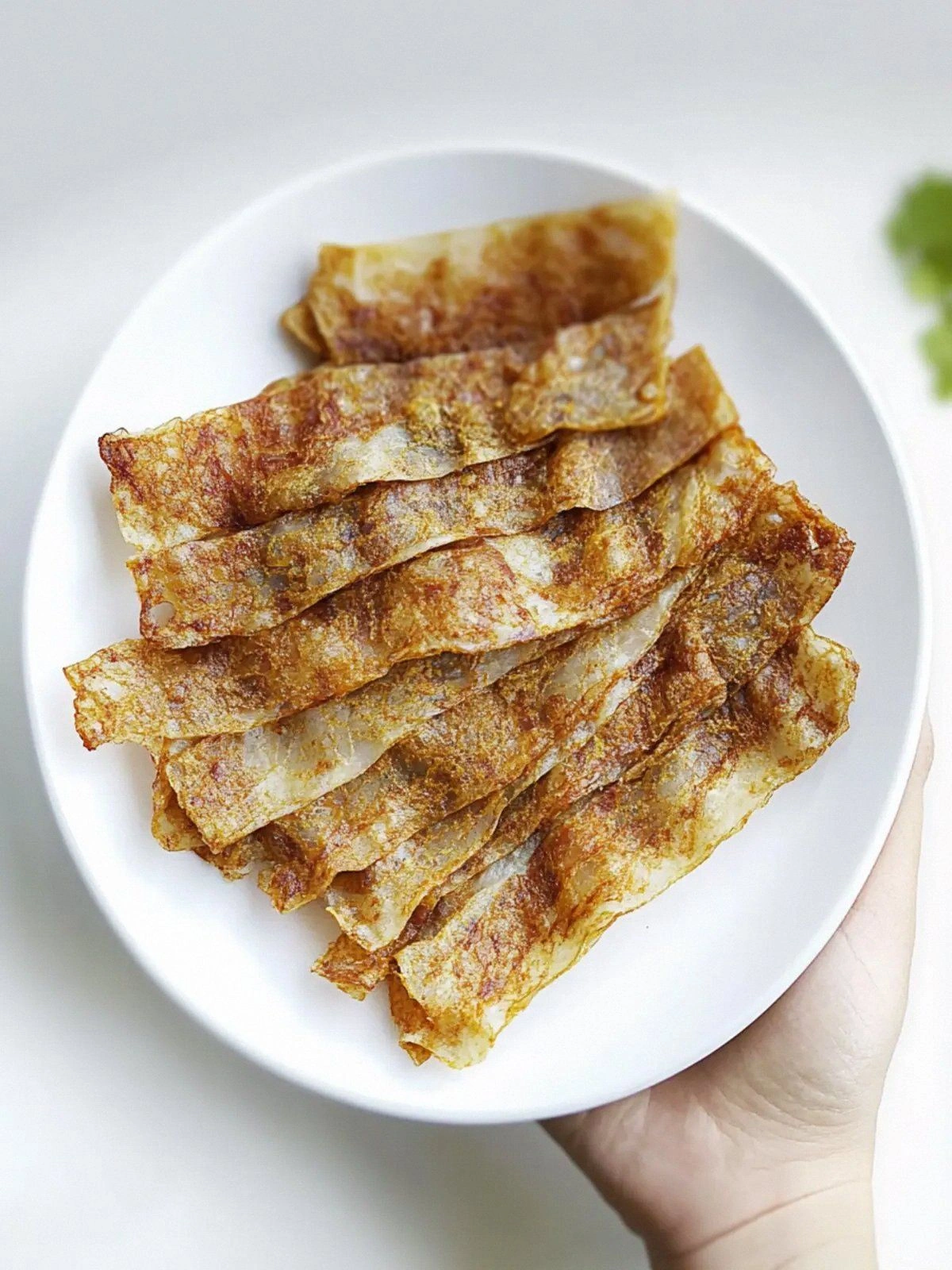
I dare you to taste this and not go back for seconds. The trickiest part is getting the rice paper to crisp up just enough while still remaining pliable enough to fold into bite‑size pieces. The next step? A secret technique that involves a quick blanch before the final fry, ensuring maximum crispness without burning. And if you think this sounds too elaborate, think again—it's a game‑changer that will make your kitchen smell incredible for hours. Picture yourself pulling this out of the pan, the whole kitchen smelling incredible, and the moment your friends gasp when they see the golden strips.
The first sizzle when the rice paper hits the pan is absolute perfection, a crackling whisper that signals the transformation is underway. As the edges brown, they emit a faint, nutty aroma that instantly elevates the dish from simple snack to culinary experience. The texture shifts from translucent to a golden, crunchy shell that gives way to a surprisingly chewy interior. Each bite releases a burst of smoky, salty, and sweet notes that dance on the tongue like fireworks. The combination of flavors and textures creates a satisfying contrast that keeps you reaching for more.
The technique is simple yet precise: you first soak the rice paper in warm water for just enough time to soften it without making it soggy, then pat it dry before applying the sauce. The sauce itself is a quick slurry that coats each sheet evenly, preventing clumping and ensuring even browning. A single layer of olive oil in the pan creates a crisp barrier that locks in moisture and allows the rice paper to crisp up to a perfect crunch. Timing is everything; if you let the sheets sit too long before frying, they will become limp and lose their signature snap. This is the moment of truth, and you must watch closely as the edges pull away from the pan.
Picture yourself pulling this out of the pan, the whole kitchen smelling incredible, and the moment your friends gasp when they see the golden strips. The aroma alone will convince even the most skeptical of vegetarians to give it a try. The finished product is versatile, pairing wonderfully with dips, salads, or simply as a standalone snack that packs a punch. I’ve seen people line up for seconds after the first bite, and it’s clear that this is hands down the best version you'll ever make at home. The next time you’re craving bacon, remember that you don’t need to break the bank or the planet—just a few pantry staples and a bit of culinary daring.
Let me walk you through every single step—by the end, you'll wonder how you ever made it any other way. I’ll keep you side by side, sharing micro‑challenges and bold claims that will keep you hooked from the first stir to the last crisp. The recipe is straightforward, but the details are what make it shine, and I’ll reveal them all now. Get ready for a kitchen adventure that’s as fun as it is delicious. Stay with me here—this is worth it.
What Makes This Version Stand Out
- Flavor Complexity: The sauce coats each sheet like velvet, delivering a savory depth that rivals cured pork. The maple syrup’s caramel notes balance the saltiness, creating a layered taste that lingers.
- Crisp Texture: The rice paper shatters like thin ice, offering a satisfying crunch that dissolves into a chewy interior. The result is a texture that feels authentic and irresistibly bite‑worthy.
- Ingredient Simplicity: Only nine pantry staples are needed, yet the flavor profile feels gourmet. This keeps the recipe approachable without sacrificing depth.
- Make‑Ahead Friendly: The coated sheets can be stored in an airtight container for up to two days, making it a perfect snack for busy schedules.
- Eco‑Friendly Appeal: Replacing bacon with rice paper reduces waste and carbon footprint, giving you guilt‑free satisfaction.
- Versatile Pairings: These strips work as a topping for salads, a dip companion, or a crunchy addition to tacos. Their flavor adapts to any dish.
- Instant Crowd‑Pleaser: Friends will gasp at the appearance and devour the first bite, making it a showstopper at gatherings.
- Health Conscious: Lower in saturated fat and cholesterol, yet still packed with protein from soy sauce and nutritional yeast.
Inside the Ingredient List
The Flavor Base
Soy sauce is the backbone of this recipe, providing umami and saltiness that mimic cured meats. Its dark color also gives the rice paper a bacon‑like hue once cooked. If you prefer a lower sodium version, opt for a reduced‑sodium soy sauce and compensate with a pinch of sea salt. The key is to let the sauce soak into the paper, creating a uniform flavor coating.
The Sweetness Factor
Maple syrup adds a natural sweetness that caramelizes during frying, creating a glossy finish on each strip. The syrup’s subtle nutty undertone complements the smoky notes, preventing the dish from feeling overly salty. Should you be allergic to maple, agave nectar or a touch of brown rice syrup works as a close substitute.
The Smoky Touch
Liquid smoke and smoked paprika together create a depth of flavor that feels authentic. Liquid smoke offers a concentrated burst of smoke that coats the paper, while paprika adds a gentle peppery warmth. Together they form a flavor profile that rivals real bacon without any animal products.
The Texture Crew
Garlic powder, nutritional yeast, and olive oil form the textural foundation. Garlic powder gives a savory kick, nutritional yeast contributes a cheesy note, and olive oil ensures a crisp exterior. If you’re looking for a richer oil, a splash of avocado oil will elevate the finish.
The Final Flourish
Water is the binding agent that allows the sauce to spread evenly across the rice paper. A small splash helps the mixture adhere without making the sheets soggy. A pinch of black pepper or crushed red pepper can be added for an extra bite if desired.
Everything's prepped? Good. Let's get into the real action...
The Method — Step by Step
- Soak the Rice Paper: Fill a shallow bowl with warm water. Submerge each sheet for 15–20 seconds until it softens but remains pliable. Drain and pat dry with a clean towel; any excess moisture will hinder crisping. The sheets should feel slightly tacky but not soggy. This step ensures even sauce absorption.
- Prepare the Sauce: In a small bowl, whisk together soy sauce, maple syrup, nutritional yeast, liquid smoke, smoked paprika, garlic powder, and a splash of water. Stir until the mixture is smooth and free of lumps. The sauce should have a syrupy consistency that coats without dripping. This is your flavor engine.
- Coat the Sheets: Lightly drizzle the sauce over each softened sheet, then use a spatula to spread it evenly. Ensure every inch is covered; the sauce acts like a glaze that will caramelize. Let the coated sheets rest for 5 minutes; this allows the flavors to penetrate.
- Preheat the Pan: Heat a non‑stick skillet over medium heat and add a teaspoon of olive oil. Once the oil shimmers, the pan is ready. A test drop of water should sizzle immediately. This ensures even heat distribution.
- Fry the Sheets: Place one coated sheet in the pan, pressing gently to flatten. Cook for 2–3 minutes on each side until golden brown and crisp. The edges should lift naturally; if they cling, give them a minute more. Flip carefully with tongs to avoid tearing.
- Optional Blanch: For an extra snap, briefly dip the cooked strips in boiling water for 10 seconds, then dry immediately. This step removes excess oil and locks in crispness. Be quick—overblanching will make them soggy.
- Drain and Cool: Transfer the fried strips to a paper towel-lined plate to absorb excess oil. Let them cool for a minute; this helps the crust set. Store any leftovers in an airtight container at room temperature for up to 48 hours.
- Serve: Toss the crispy strips in a bowl, drizzle with a light sesame oil drizzle if desired, and serve immediately. Pair with a tangy dipping sauce or sprinkle with fresh herbs for an extra pop. Enjoy the crunch and flavor explosion.
That's it — you did it. But hold on, I've got a few more tricks that'll take this to another level...
Insider Tricks for Flawless Results
The Temperature Rule Nobody Follows
Most cooks assume medium heat is enough, but a steady 350°F (175°C) is optimal for rice paper. This temperature ensures the paper crisps without burning the sauce. If your stove’s temperature gauge is off, test with a drop of water; it should sizzle gently. Consistent heat yields a uniform golden color.
Why Your Nose Knows Best
Smell the sauce before coating; it should have a rich, smoky aroma. If it feels flat, add a pinch of liquid smoke or a dash of smoked paprika. Your nose is a reliable guide to flavor balance, and it’ll help you avoid bland results.
The 5-Minute Rest That Changes Everything
After frying, let the strips rest on a wire rack for 5 minutes. This allows steam to escape, preventing sogginess. The rest period also lets the crust set, giving the strips a more satisfying snap.
Don’t Overcrowd the Pan
Frying in batches preserves heat and ensures each sheet crisps evenly. If you crowd the pan, the temperature drops, causing uneven browning. Keep a small stack of finished strips warm in a low oven while you finish the batch.
Use a Splatter Guard for Clean Cooking
Oil splatter can ruin the kitchen’s cleanliness and create a safety hazard. A splatter guard keeps oil contained while you fry, making cleanup a breeze. It also helps maintain a steady temperature by preventing excess heat loss.
Finish with a Light Drizzle of Sesame Oil
A drizzle of toasted sesame oil adds a nutty aroma and a glossy finish. It also enhances the overall flavor profile, tying together the smoky and sweet notes. Just a few drops are enough to elevate the dish.
Creative Twists and Variations
This recipe is a playground. Here are some of my favorite ways to switch things up:
Spicy Sriracha Bacon
Swap the maple syrup with a tablespoon of sriracha for a fiery kick. The heat balances the smoky flavor, creating a spicy, savory snack. This variation is perfect for those who love a little heat.
Herb‑Infused Delight
Add a teaspoon of dried thyme or oregano to the sauce for an aromatic twist. The herbs complement the smoky base and add depth. Serve with a fresh salad for a Mediterranean flair.
Cheesy Nutritional Yeast Crunch
Increase the nutritional yeast to 2 tablespoons for a cheesy, umami‑rich coating. The extra yeast enhances the savory profile and adds a subtle nutty taste. This version is great for cheese lovers who want a vegan alternative.
Sweet Chili Glaze
Replace the maple syrup with a tablespoon of sweet chili sauce. The sauce’s sweet and spicy notes give the bacon a different dimension. It pairs wonderfully with Asian-inspired dishes.
Gluten‑Free Variation
Use gluten‑free soy sauce and a pinch of xanthan gum to thicken the sauce slightly. This ensures the coating sticks even better to the rice paper. It’s a perfect option for those with gluten sensitivities.
Breakfast‑Style Bacon Bits
Serve the crispy strips with a side of avocado toast and a drizzle of hot sauce. The bacon bits add a smoky crunch to breakfast, making it feel indulgent yet healthy.
Storing and Bringing It Back to Life
Fridge Storage
Place the cooled bacon strips in an airtight container lined with parchment paper. Store in the refrigerator for up to 48 hours. The parchment absorbs excess moisture, keeping the strips crisp.
Freezer Friendly
For longer storage, flash‑freeze the strips on a parchment‑lined tray before transferring them to a freezer bag. They’ll keep for up to 3 months. When ready to eat, let them thaw at room temperature.
Best Reheating Method
Reheat in a skillet over medium heat for 2 minutes, flipping once. Add a tiny splash of water before heating to create steam, which helps revive crispness. Avoid microwaving; it will make them soggy.