I was standing in my kitchen, staring at a single, battered lobster tail that had somehow survived the trip from the seafood market. The crust was uneven, the meat was a pale pink that looked like it needed a boost of confidence. I remember the moment: a burst of panic, a whisper to myself, “I can’t just let this be another sad dinner.” That was the spark that led me to reinvent the classic baked lobster tail. I started experimenting, adding a splash of white wine, a whisper of lemon zest, a pinch of paprika, and a drizzle of butter that would melt into a golden glaze. The result? A dish that feels like a hug from the sea, a buttery, garlicky, citrusy masterpiece that turns any dinner into a celebration.
Picture the aroma that fills the kitchen as the lobster hits the oven: the sweet, briny scent of the sea, the sharp tang of citrus, the faintly nutty aroma of toasted breadcrumbs. The sound of the oven door closing is like a promise. When you pull the lobster out, the steam rises in a cloud that smells of fresh parsley and butter. The first bite is a burst of sweet, succulent lobster meat, followed by a gentle kick of paprika and a subtle citrus zing that lingers on the palate. The crust is golden and crisp, while the inside remains moist and tender, like velvet draped over a crown.
What makes this version stand out is that it balances the rich, buttery flavor of lobster with a bright, herbal freshness that keeps the dish from feeling heavy. I added a splash of white wine to deglaze the pan, a touch of lemon butter sauce for depth, and a sprinkle of panko breadcrumbs for a satisfying crunch. The result is a dish that feels both luxurious and approachable, perfect for a weeknight dinner or a special occasion. I dare you to taste this and not go back for seconds; the flavors will keep you coming back for more.
If you’ve ever tried a bland baked lobster and felt let down, you’re not alone. Many recipes fall flat because they ignore the importance of seasoning the shell, using the right amount of butter, and creating a crisp crust. This version addresses all those pitfalls head-on. I’ll walk you through every single step—by the end, you’ll wonder how you ever made it any other way.
What Makes This Version Stand Out
- Flavor: The combination of lemon zest, garlic, and a dash of Old Bay seasoning creates a bright, aromatic base that elevates the natural sweetness of lobster. The subtle heat from paprika adds depth without overwhelming the delicate meat.
- Texture: A golden, crisp breadcrumb topping contrasts perfectly with the tender, melt‑in‑your‑mouth interior. The butter glaze seals in moisture, keeping the meat juicy.
- Simplicity: With less than a dozen ingredients and a straightforward baking method, this recipe is easy to master, even for novice cooks.
- Uniqueness: The addition of white wine deglazes the pan, creating a savory sauce that clings to the lobster, while the lemon butter sauce adds a glossy finish.
- Crowd‑Pleaser: Whether you’re feeding a family or hosting a dinner party, the buttery richness and aromatic herbs make this dish a hit.
- Ingredient Quality: Fresh, high‑quality lobster tails and fresh herbs are the foundation; every component is chosen for maximum flavor.
- Cooking Method: Baking at a controlled temperature ensures even cooking and a golden crust, avoiding the pitfalls of over‑baking or under‑cooking.
- Make‑Ahead Potential: The lobster can be seasoned and refrigerated up to 24 hours before baking, making it ideal for last‑minute dinner plans.
Alright, let’s break down exactly what goes into this masterpiece…
Inside the Ingredient List
The Flavor Base
The foundation of this dish starts with the lobster tails themselves. Fresh, wild‑caught lobster tails provide the sweet, succulent meat that is the star of the show. If you can’t find fresh, frozen tails are a solid substitute, but they’ll need a quick thaw in cold water to retain their texture. The next key component is butter—unsalted, melted—to coat the meat and create a glossy, caramelized finish. A splash of white wine is deglazed into the pan, capturing the savory juices that cling to the shell and turning them into a luscious sauce. This wine layer is optional for those who prefer a strictly buttery profile, but it adds a depth that’s hard to resist.
The Texture Crew
Breadcrumbs are the unsung hero that gives the crust that satisfying crunch. I use panko for its light, airy texture, which turns into a crisp, golden shell that snaps like thin ice when you bite. Parmesan cheese adds a nutty, umami boost, while fresh parsley brings a bright, herbal note that balances the richness. The final touch is a drizzle of olive oil, which helps the breadcrumb topping adhere and gives the lobster a polished sheen. Together, these ingredients form a multi‑layered texture that keeps each bite exciting.
The Unexpected Star
Lemon is the secret weapon that cuts through the buttery richness. I zest the lemon to release its aromatic oils and then juice it for a fresh, tart brightness that lifts the entire dish. Garlic is minced finely, so its flavor permeates the meat without dominating. Paprika adds a gentle warmth and a subtle smoky undertone, while Old Bay seasoning brings a classic, maritime flavor profile that resonates with seafood lovers. Together, these spices create a harmonious balance that feels both indulgent and refreshing.
The Final Flourish
The finishing touches are where this recipe truly shines. A light sprinkle of fresh parsley right before serving adds a pop of color and a burst of herbal freshness. A drizzle of lemon butter sauce—a simple mix of melted butter, lemon juice, and a pinch of salt—adds a glossy, silky finish that coats the lobster and enhances every bite. If you prefer a more decadent sauce, a small amount of white wine can be reduced into a reduction that’s poured over the lobster before serving. These final elements elevate the dish from great to unforgettable.
Everything’s prepped? Good. Let’s get into the real action…
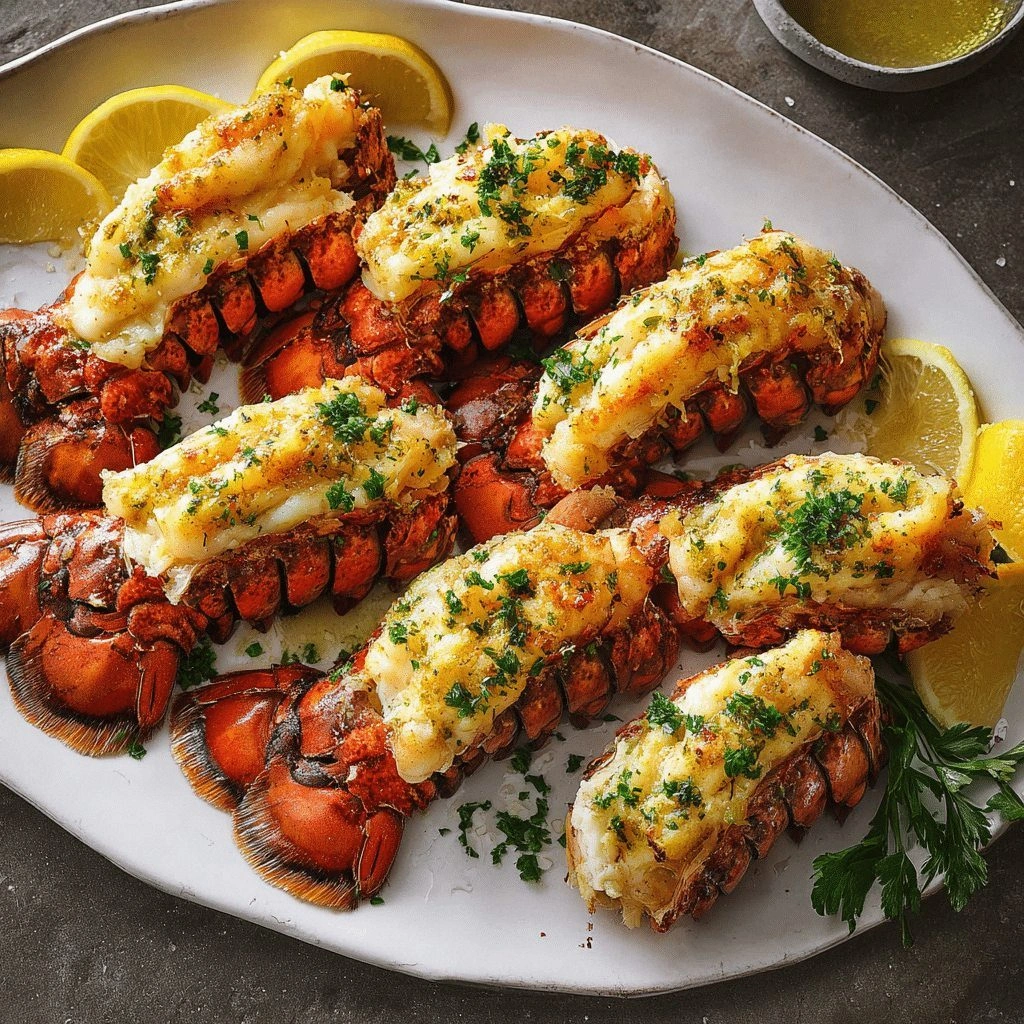
The Method — Step by Step
- Preheat your oven to 425°F (220°C). While the oven warms, prepare the lobster tails by cutting the top shell lengthwise with kitchen shears, exposing the meat. This step is crucial for even cooking; if you leave the shell intact, the meat will cook unevenly. A quick visual cue: the meat should lie flat, ready to be buttered.
- In a small saucepan, melt 4 tablespoons of unsalted butter over medium heat. Add 2 cloves of minced garlic and sauté for about 30 seconds until fragrant but not browned. This creates a garlicky butter base that will coat the lobster and infuse it with aroma. Watch the garlic; it’s a quick step.
- Stir in the zest of one lemon and 1 teaspoon of paprika. The citrus zest releases essential oils that brighten the butter, while paprika adds a subtle warmth. The mixture should smell toasty and aromatic, indicating the flavors are developing.
- Pour in 1/2 cup of white wine and let it reduce for 2–3 minutes until it’s slightly thickened. This reduction will become the sauce that clings to the lobster. The wine should evaporate to a syrupy consistency, leaving behind a savory depth.
- Brush the lobster meat generously with the butter‑garlic‑wine mixture, ensuring every surface is coated. The coating will caramelize in the oven, creating a golden crust. A good rule of thumb: the butter should pool slightly on the meat, not drip.
- In a bowl, combine 1/4 cup of panko breadcrumbs, 1/4 cup grated Parmesan, 1 tablespoon olive oil, and 1 teaspoon of Old Bay seasoning. Mix until the crumbs are evenly moistened. Sprinkle this mixture over the buttered lobster, pressing lightly to adhere. The breadcrumb layer is what will give you that satisfying crunch.
- Place the lobster tails on a baking sheet lined with parchment paper. Bake for 12–15 minutes, or until the meat turns opaque and the breadcrumb topping is golden brown. The internal temperature should reach 140°F (60°C) for safe consumption. Keep a close eye; the crust should be crisp without burning.
- While the lobster is baking, whisk together 1 tablespoon of melted butter, the juice of half a lemon, and a pinch of salt to make the lemon butter sauce. This sauce is poured over the lobster right before serving, adding a glossy, silky finish. The lemon butter should be silky, not chunky.
- Remove the lobster from the oven and let it rest for 2 minutes. Then drizzle the lemon butter sauce over the top and garnish with 2 tablespoons of chopped parsley. Serve immediately, accompanied by a side of steamed asparagus or a fresh green salad.
That’s it — you did it. But hold on, I've got a few more tricks that'll take this to another level…
Insider Tricks for Flawless Results
The Temperature Rule Nobody Follows
Many home cooks bake lobster tails at 350°F, which can lead to uneven cooking. I always set the oven to 425°F for a quick, even bake that locks in moisture. The high heat creates a crisp exterior while keeping the meat tender. If you’re using a convection oven, reduce the temperature by 25°F to avoid over‑browning.
Why Your Nose Knows Best
The aroma of garlic and lemon in the butter mixture is a real indicator of readiness. When the butter starts to foam and the garlic releases a rich scent, it’s time to coat the lobster. This sensory cue ensures you’re adding flavors at the optimal moment, preventing bitterness or under‑seasoning.
The 5‑Minute Rest That Changes Everything
After removing the lobster from the oven, let it rest for 5 minutes before serving. This short pause allows the juices to redistribute, ensuring each bite is juicy and flavorful. Skipping this step can leave the meat dry and less succulent.
Use Fresh Herbs, Not Dried
Fresh parsley and dill bring a bright, vibrant flavor that dried herbs simply can’t match. The chlorophyll in fresh herbs releases a bright green color and a fresh, clean taste that pairs beautifully with buttery lobster.
Add a Splash of Champagne for Extra Luxury
If you’re feeling extra fancy, replace the white wine with chilled Champagne. The bubbles add a celebratory feel, and the acidity cuts through the richness, giving the dish an elegant finish. Just remember to reduce it to a syrupy consistency before brushing it on the lobster.
Creative Twists and Variations
This recipe is a playground. Here are some of my favorite ways to switch things up:
Spicy Cajun Lobster
Swap the paprika for a blend of cayenne and smoked paprika, and add a pinch of cayenne pepper. The result is a spicy, smoky flavor that pairs well with a cool cucumber salad.
Herb‑Infused Lobster
Replace the parsley with fresh dill and add a splash of white wine vinegar. The dill’s bright, grassy notes give the dish a fresh, almost Mediterranean feel.
Coconut‑Lime Lobster
Swap the butter for coconut milk and add lime zest and juice. The coconut adds a tropical sweetness, while the lime provides a zesty punch that’s perfect for summer.
Garlic Parmesan Crusted Lobster
Use a mixture of garlic powder, grated Parmesan, and breadcrumbs for a thicker, crunchier crust. This version is ideal for those who love a hearty, cheesy bite.
Lobster with Tomato‑Basil Sauce
Serve the lobster over a bed of roasted tomatoes and basil. The tomato sauce adds acidity and sweetness, balancing the richness of the lobster.
Storing and Bringing It Back to Life
Fridge Storage
Store cooked lobster tails in an airtight container in the refrigerator for up to 2 days. The meat will stay moist, but the breadcrumb crust may soften slightly. Reheat gently to preserve texture.
Freezer Friendly
Wrap the lobster tails tightly in plastic wrap and place them in a freezer bag. They can be frozen for up to 3 months. Thaw overnight in the refrigerator before reheating.
Best Reheating Method
Reheat the lobster in a preheated oven at 300°F (150°C) for 10–12 minutes. Add a splash of water to the baking dish before reheating; this steams the lobster back to its original tenderness. Finish with a quick brush of butter to restore that glossy sheen.